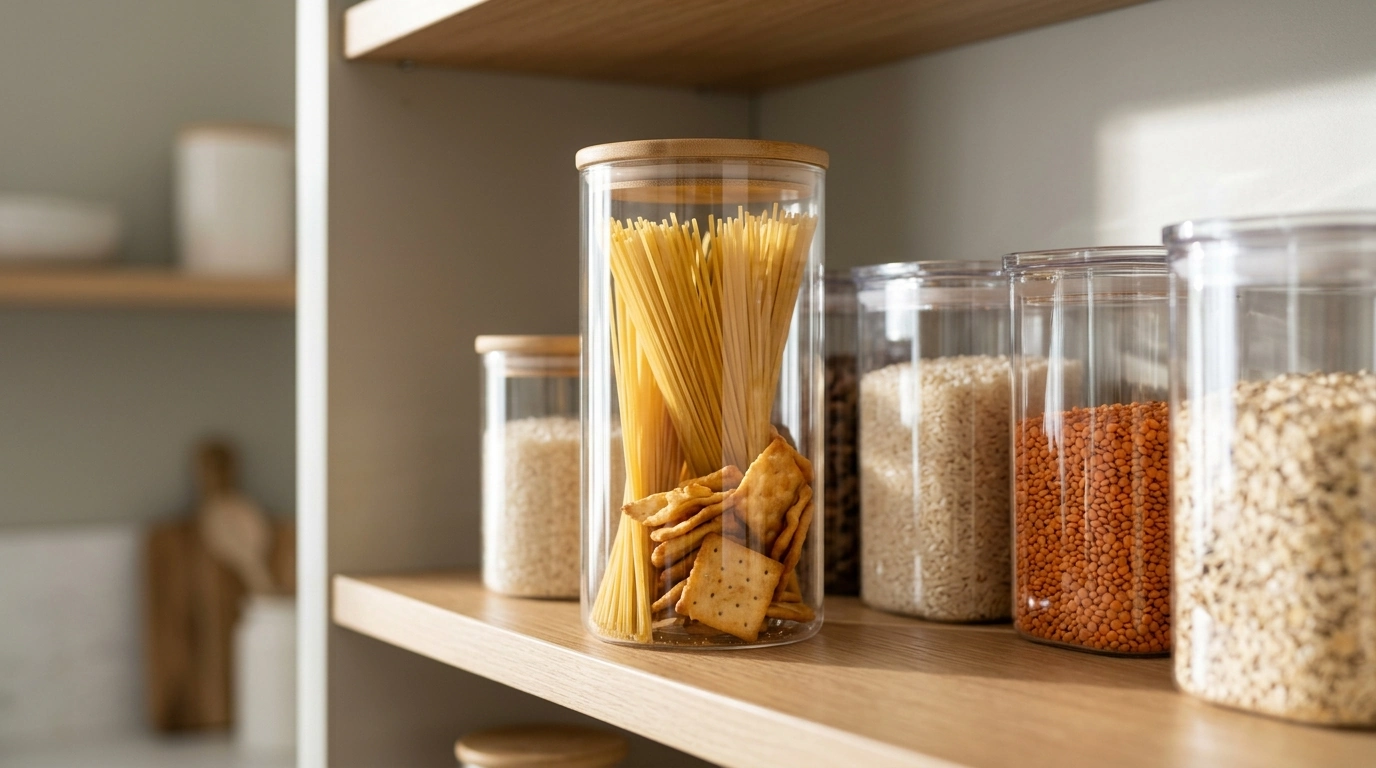
A clear, moisture-resistant container makes everyday pantry storage easier: dry pasta stays crisp, snacks stay fresh, and ingredients are visible at a glance. A well-designed transparent jar also replaces torn bags and half-closed boxes, so shelves look calmer and restocking feels quicker. Below are the key benefits to expect, what “moisture-proof” really does for dry foods, and the simple habits that help prevent staleness, clumping, and pantry clutter.
Original packaging is convenient at the store, but it’s rarely ideal once opened. A sturdy, sealed jar helps protect dry goods from everyday kitchen conditions while making your pantry easier to manage.
If you’re starting with one upgrade, a dedicated pasta-and-snack jar is a high-impact choice because those items are opened often and go stale quickly when the seal isn’t consistent. A practical option is the Transparent Pasta & Snack Storage Container – Moisture-Proof Kitchen Jar, which keeps pantry staples visible and easy to grab during busy weeknights.
“Moisture-proof” doesn’t mean vacuum-sealed or shelf-life forever—it means the lid and rim are designed to reduce moisture exchange after opening. That matters because many pantry foods go from crisp to stale simply by picking up humidity from the air.
| Pantry item | Typical issue in original packaging | How a sealed jar helps |
|---|---|---|
| Spaghetti or long pasta | Crushed ends, open bags, humidity exposure | Keeps strands protected and reduces staleness |
| Crackers and cookies | Softening after opening | Slows moisture pickup and preserves crunch |
| Nuts and trail mix | Rancid odors from nearby foods, loss of crispness | Reduces odor transfer and exposure to humid air |
| Flour or sugar | Clumping and pantry mess | More controlled pouring and fewer lumps |
Not all clear containers behave the same once they’re used daily. A few design details make the difference between “looks nice” and “stays useful.”
For food safety and storage guidance, it’s also worth referencing trusted resources like the FDA’s food storage and food safety information and the USDA FoodKeeper app, especially when you’re organizing bulk buys or rotating pantry items by date.
A clear, sealed jar earns its shelf space when it does more than hold spaghetti. The same container style can simplify prep, portioning, and cleanup in multiple “high-traffic” areas of the kitchen.
Once dry goods are organized, finishing meals becomes faster when your tools are predictable and easy to clean. For example, keep a grater within reach for pasta night—either the Stainless Steel Vertical Food Grater with Wooden Handle – Manual 3-in-1 Slicer for quick prep, or the Premium Acacia Wood Cheese Grater with Stainless Steel Blade and Catch Box when you want a tidy countertop setup with contained shreds.
A tight seal slows humidity exposure, which helps many snacks stay crunchy longer. Results depend on the snack type and how often the jar is opened, so keep the container dry, seal it fully, and store it away from heat and humid spots.
Yes, for typical pantry timelines, as long as the lid seals well and the container is kept away from direct sunlight and heat. Transparency is great for visibility, but placement matters if your pantry gets strong light.
Wash with mild soap and water, avoid abrasive scrubbers that can dull the clear surface, and dry completely before refilling—especially around the lid and seal. Clean more often for oily or strongly scented items like nuts, chips, or seasoned snacks.







Leave a comment