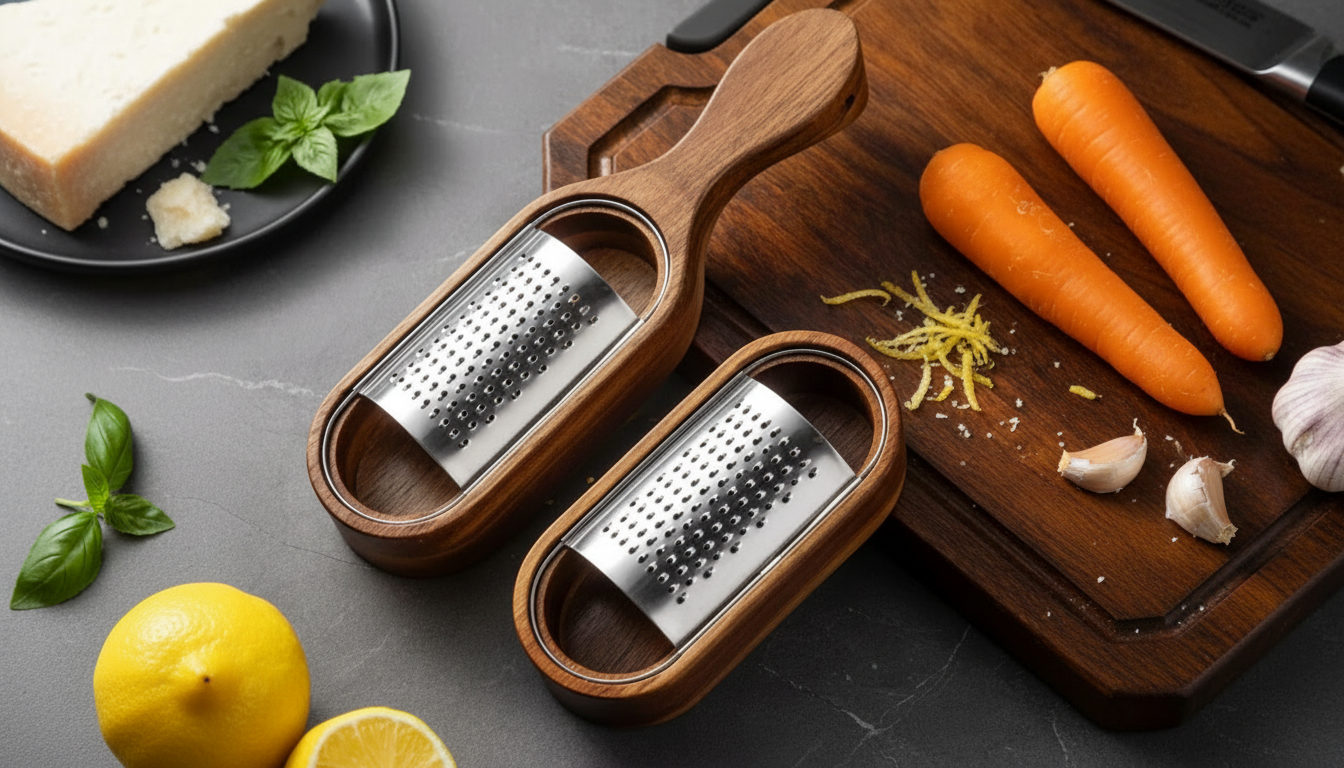
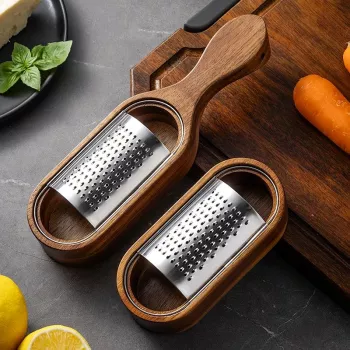
A well-made cheese grater should feel stable, grate cleanly, and keep the counter tidy. The Premium Acacia Wood Cheese Grater with Stainless Steel Blade and Catch Box combines the warm, substantial feel of acacia wood with the efficient bite of stainless steel—then finishes the job with a built-in catch box that helps keep shreds contained. Whether it’s a quick weeknight pasta or a cheese board for friends, it turns topping prep into a neat, controlled step.
This style of grater shines when you want controlled grating and a tidy finish. Keep a few staple ingredients on hand and it becomes one of those tools that earns a permanent spot in the routine.
Tip: Very soft cheeses can smear rather than shred; chilling the cheese briefly can help, and immediate rinsing prevents residue from drying onto the teeth.
Small technique tweaks make a big difference in consistency and safety—especially with hard cheeses.
For the cleanest “snowy” parmesan topping, grate just before serving so the shreds stay airy and don’t compress in the container.
Acacia is valued for its durability and attractive grain, but like most woods, it lasts longer with mindful cleaning and moisture control. Stainless steel is resilient too, yet it benefits from prompt drying and occasional attention to any trapped bits around the grating teeth.
| Task | How often | Why it matters |
|---|---|---|
| Hand-wash and dry immediately | After each use | Helps protect wood and keeps the blade clean |
| Brush-clean the blade teeth | After sticky or soft ingredients | Prevents buildup and preserves grating performance |
| Oil the wood (food-safe) | Every few weeks (or when dry-looking) | Helps reduce drying, dull appearance, and cracking risk |
| Store fully dry | Always | Prevents odors and moisture-related wear |
For general sanitation habits around food-prep surfaces, the USDA provides practical guidance on cleaning and sanitizing kitchen boards and tools: USDA FSIS — Kitchen Cutting Boards (Clean and Sanitize Guidance). For a broader overview of food-contact materials in the U.S., see: FDA — Food Contact Substances (Overview). And for general wood characteristics and context on acacia, this reference is helpful: The Wood Database.
Not all grating surfaces behave the same. If this is a frequently used tool in your kitchen, matching the grater style to your typical recipes makes prep smoother and cleanup easier.
It’s best to hand-wash and dry promptly. Dishwashers and soaking expose wood to prolonged heat and moisture, which can lead to warping, cracking, or a dull finish over time.
Hard chocolate, some citrus zest (depending on how fine the blade is), and small amounts of garlic or ginger are good options. Very soft items may smear instead of shred, so rinse and brush-clean the blade soon after use.
Oil it when the wood looks dry or feels rough—often every few weeks in a busy kitchen. Use a food-safe mineral oil or board conditioner, let it absorb, then wipe off any excess.










Leave a comment