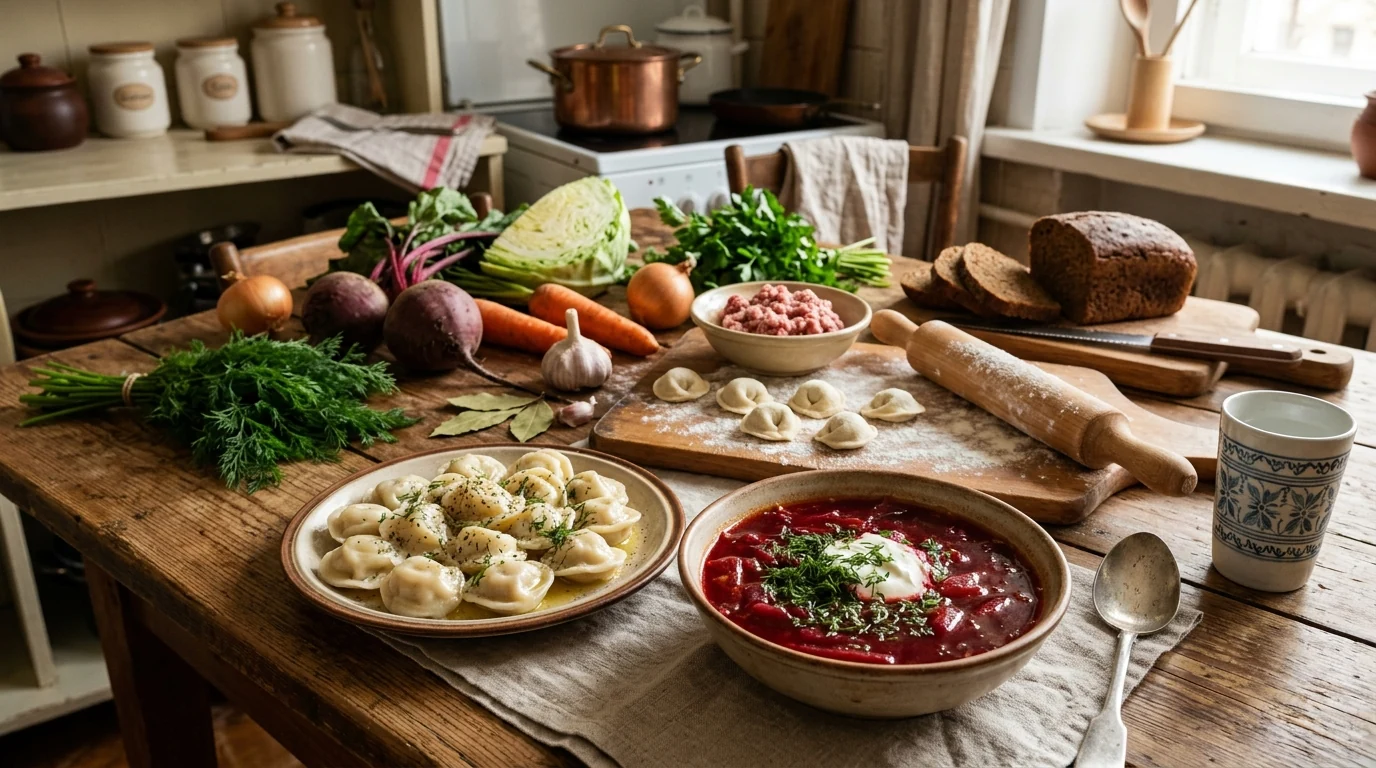
Borscht and pelmeni are two of the most recognizable comfort foods associated with Russian home cooking: a beet-forward soup with deep, savory balance and tender dumplings built for sharing. The key to getting them right is less about rare ingredients and more about technique—layering flavor, managing dough texture, and choosing the right fillings and garnishes. This guide walks through essential methods, smart shortcuts, and a few contemporary twists that still taste true to the classics. For background on borscht’s history and regional spread, see Encyclopaedia Britannica’s entry on borscht.
Sauté diced onion and carrot in oil or butter until soft and lightly golden. Add garlic near the end of the sauté so it stays aromatic instead of turning bitter.
Add shredded cabbage and (if using) diced potatoes early enough to soften without collapsing. Keep the soup at a gentle simmer so vegetables turn tender, not ragged.
For richer beet flavor and better color retention, sauté or roast shredded beets separately, then add them to the pot. This concentrates sweetness and avoids the “boiled beet” flatness that can happen when everything cooks together from the start.
Stir in a small amount of vinegar or lemon juice after the beets go in. Avoid prolonged hard boiling; aggressive heat can darken the broth and mute beet flavor.
Off heat, stir in dill and parsley. Taste and adjust salt, acid, and (if needed) a tiny touch of sweetness to round sharp edges.
Serve with sour cream and dark bread. Optional add-ins—beans, mushrooms, or smoked elements—can add depth while keeping the soup’s familiar balance.
| Component | Classic choice | Easy swap | Flavor impact |
|---|---|---|---|
| Broth | Beef or pork stock | Vegetable stock + mushrooms | Lighter, more earthy |
| Acidity | Vinegar | Lemon juice or pickle brine | Brighter, tangier finish |
| Sweetness balance | Carrot/onion sweetness | A pinch of sugar or grated apple | Rounds sharp edges |
| Beets | Fresh beets | Pre-cooked beets (chilled section) | Faster, slightly milder |
| Finishing herb | Dill | Dill + chives | More modern, oniony lift |
If you’re cooking meat fillings, handle leftovers safely and reheat thoroughly. The USDA’s safe temperature guidance is a solid reference point: USDA Food Safety and Inspection Service safe temperature chart.
Two handy kitchen add-ons for this workflow: the Stainless Steel Vertical Food Grater with Wooden Handle – Manual 3-in-1 Slicer for quick, tidy shredding, and a simple table-friendly serve option like the 4PCS Retro Bead Drinking Glass Set for a traditional soup-and-dumplings dinner setup.
For repeatable results (and less guesswork when you’re juggling soup and dumplings at the same time), Russian Food Recipes Borscht & Pelmeni (digital cookbook) pulls the full process together: sequencing, reliable ratios, and variations that fit different schedules, diets, and ingredient availability. It’s a digital download, so it’s easy to keep open on a phone or tablet while you cook.
Avoid prolonged hard boiling after adding beets, and add a small amount of vinegar or lemon juice. Sautéing or roasting shredded beets separately before combining also helps preserve a vivid color.
The most common causes are weak seals, overfilling, dough that’s too dry and cracks, or boiling too aggressively. Seal edges firmly and cook at a gentle simmer so the dough can set without bursting.
Yes. Add frozen pelmeni to gently simmering water or broth, stir carefully at the beginning to prevent sticking, and cook 1–2 minutes longer than fresh until they float and the dough is tender.












Leave a comment