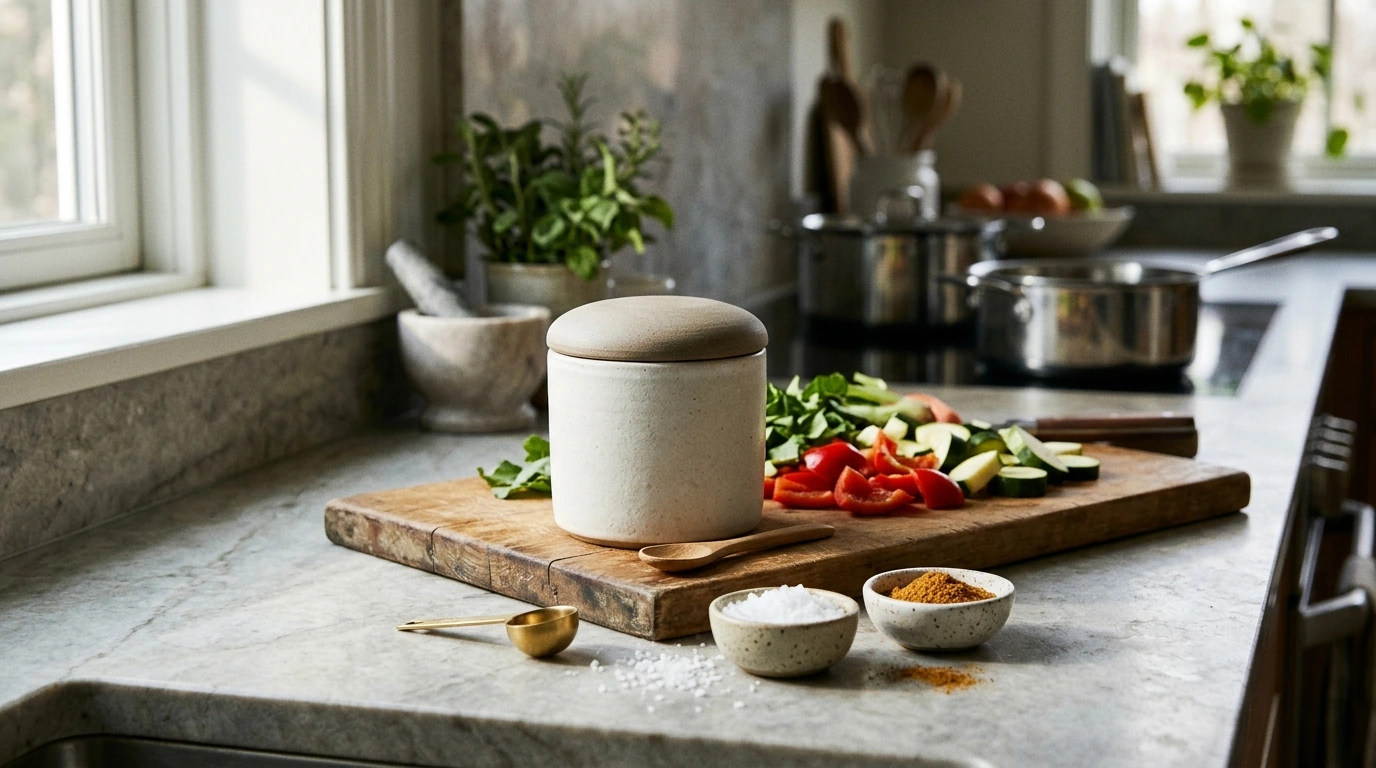
A ceramic seasoning jar can turn daily cooking into a calmer, cleaner routine—keeping spices dry, easy to reach, and better protected from light and humidity. The right jar also supports refill habits, reduces clutter, and keeps your go-to flavors ready for quick weeknight meals or slow weekend prep.
Some kitchen tools earn permanent counter space because they make cooking feel simpler. A ceramic seasoning jar is one of them—especially for the spices you reach for every day.
Low-waste kitchens aren’t about perfection. They’re built on small choices that reduce repeat purchases, packaging, and food waste over time. Reusable spice storage is a practical step because seasonings are easy to buy in bulk or refill pouches, and they don’t require complicated maintenance.
| Storage type | Strengths | Trade-offs | Best for |
|---|---|---|---|
| Ceramic jar | Blocks light, odor-resistant, sturdy feel | Heavier; can chip if dropped | Countertop staples and frequent-use blends |
| Glass jar | Visible contents, non-reactive, easy to wash | Light exposure unless stored in a cabinet | Pantry shelves and labeled spice collections |
| Stainless container | Tough and long-lasting, light-blocking | Can hide contents; may need labels | Travel kits, camping boxes, busy kitchens |
| Plastic shaker | Lightweight and inexpensive | Can absorb odors; wears faster | Short-term use or backups |
Spices don’t need fancy storage, but they do need consistent storage. Pay attention to these details so your jar performs well day after day.
For additional guidance on safe food storage habits at home, the FDA’s overview is a helpful reference: FDA Food Storage and Safety.
A countertop seasoning setup works best when it stays small, intentional, and easy to reset. The goal is faster cooking—not more items to manage.
If you’re building more refill habits across the kitchen, the EPA offers practical tips for reducing and reusing everyday materials: EPA: Reducing and Reusing Basics.
For a quick reference on how long various pantry items typically keep their quality, the USDA’s tool is useful: USDA FoodKeeper App.
If you’re ready to keep a daily staple within easy reach, the Ceramic Seasoning Jar – Eco-Friendly Spice Storage for Kitchen Essentials is designed as an everyday spice keeper that looks cohesive on the counter while helping protect seasonings from light. A sturdy container can also reduce spills during busy meal prep, keeping your cooking flow fast and your cleanup simpler.
To round out a streamlined prep-and-serve setup, pair your countertop spice routine with tools you’ll use constantly, like the Stainless Steel Vertical Food Grater with Wooden Handle – Manual 3-in-1 Slicer for quick zest, cheese, or garlic, and the 4PCS Retro Bead Drinking Glass Set for everyday water, iced coffee, or casual hosting.
Ceramic can help slow flavor loss because it blocks light, and a well-fitting lid helps reduce moisture exposure. Freshness still depends on keeping spices cool, dry, and sealed when not in use.
Check the care instructions for your specific jar, since finishes and lids can vary. When in doubt, hand-washing and thorough air-drying before refilling is the safest routine for preventing trapped moisture.
Keep 1–3 high-use staples on the counter—such as salt, a pepper blend, or an all-purpose seasoning—so they’re always within reach. Delicate herbs and spices meant for long-term storage do best in a cool, dark cabinet.









Leave a comment