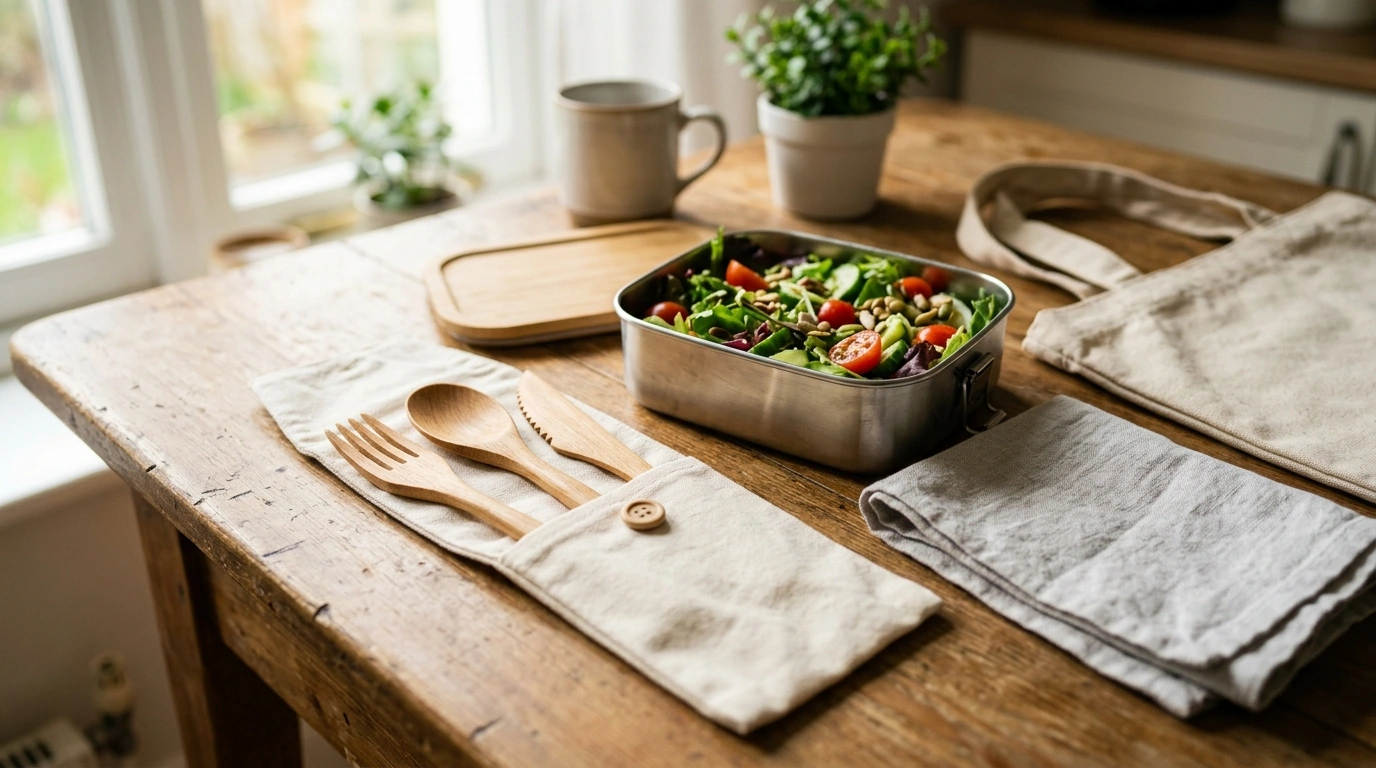
An eco-friendly wooden cutlery set makes it easier to skip single-use utensils without sacrificing comfort or style. From packed lunches and office drawers to camping kits and picnic baskets, wooden pieces can offer a lightweight, reusable alternative with a warm, natural feel—when chosen and cared for properly.
Swapping disposable forks and spoons for a reusable set is one of those small habits that adds up fast. The U.S. Environmental Protection Agency highlights “reduce” and “reuse” as top steps for cutting waste, especially when everyday routines are involved. Learn more at EPA — Reduce, Reuse, Recycle.
Wooden utensils also tend to be quieter than metal, which is a subtle perk for office lunches, shared spaces, or early-morning breakfasts. And because wood doesn’t conduct heat the same way metal does, it stays comfortable in hand for warm meals like soups, oatmeal, or stir-fries (with reasonable care).
A simple trick for consistency: keep one set where meals happen. One in your backpack or tote, another in the car, or a spare in a desk drawer. When the utensils are already there, it’s easier to say “no thanks” to plastic cutlery without thinking twice.
Choosing the right reusable cutlery comes down to how you eat and where you eat. Wood shines for portability and comfort, while stainless steel wins on “toughness.” Bamboo can be ultra-light, but quality varies. And reusable plastic can be convenient, though it may show wear sooner.
| Material | Best for | Watch-outs |
|---|---|---|
| Wood | Lunch kits, picnics, low-noise dining | Avoid long soaking; dry promptly |
| Stainless steel | Daily home use, high durability | Heavier; can scratch delicate surfaces |
| Bamboo | Ultra-light travel sets | Check for splintering and coatings |
| Reusable plastic | Budget-friendly kits | Odor retention; surface wear over time |
If you’re aiming for a lower-waste lifestyle, it also helps to consider sourcing and long-term durability. The USDA Forest Service provides background on sustainable forest management and why responsible forestry matters for wood products: USDA Forest Service — Sustainable Forest Management.
For everyday eating, the goal is simple: a set that feels good in your hand and holds up to repeat use. A well-finished wooden fork shouldn’t feel fuzzy, and the spoon bowl should feel smooth at the lips. If you plan to pack the set alongside saucy meals, prioritize easy cleaning and a storage pouch that can breathe between uses.
Wood is resilient, but it performs best with “quick wash, quick dry” habits. Conditioning is especially helpful in dry climates or if your utensils start to look dull. For general guidance on materials intended to contact food, see U.S. FDA — Food Contact Substances.
The Eco-Friendly Wooden Cutlery Set is a simple, reusable option for meals away from home—easy to slip into lunch bags, picnic baskets, and travel kits. Its natural look fits right in with casual table settings, and it’s an easy add-on when building a lower-waste routine alongside reusable containers and drinkware.
| Item | Price | Availability |
|---|---|---|
| Eco-Friendly Wooden Cutlery Set | 19.51 USD | In stock |
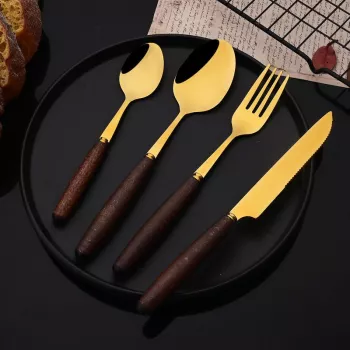
To round out a grab-and-go kit, consider adding a dedicated drink glass set for hosting or patio meals, like the 4PCS Retro Bead Drinking Glass Set. If you do simple food prep while traveling—think citrus zest, cheese, or veggies—pack a compact tool such as the Stainless Steel Vertical Food Grater with Wooden Handle – Manual 3-in-1 Slicer or the Premium Acacia Wood Cheese Grater with Stainless Steel Blade and Catch Box. The best kit is the one that matches your real routine—no extras you won’t use.
Yes—wood stays comfortable to hold and touch with hot foods, but avoid leaving utensils sitting in hot liquids for long periods. Wash and dry promptly to keep the wood in good shape.
Often not recommended; high heat and long wash cycles can dry out wood and cause warping or cracking. Hand-washing and quick drying usually extends lifespan.
Clean with soap and warm water, dry fully, and condition occasionally with food-safe oil. Replace pieces that develop deep cracks or persistent odors since those can be harder to fully clean.









Leave a comment