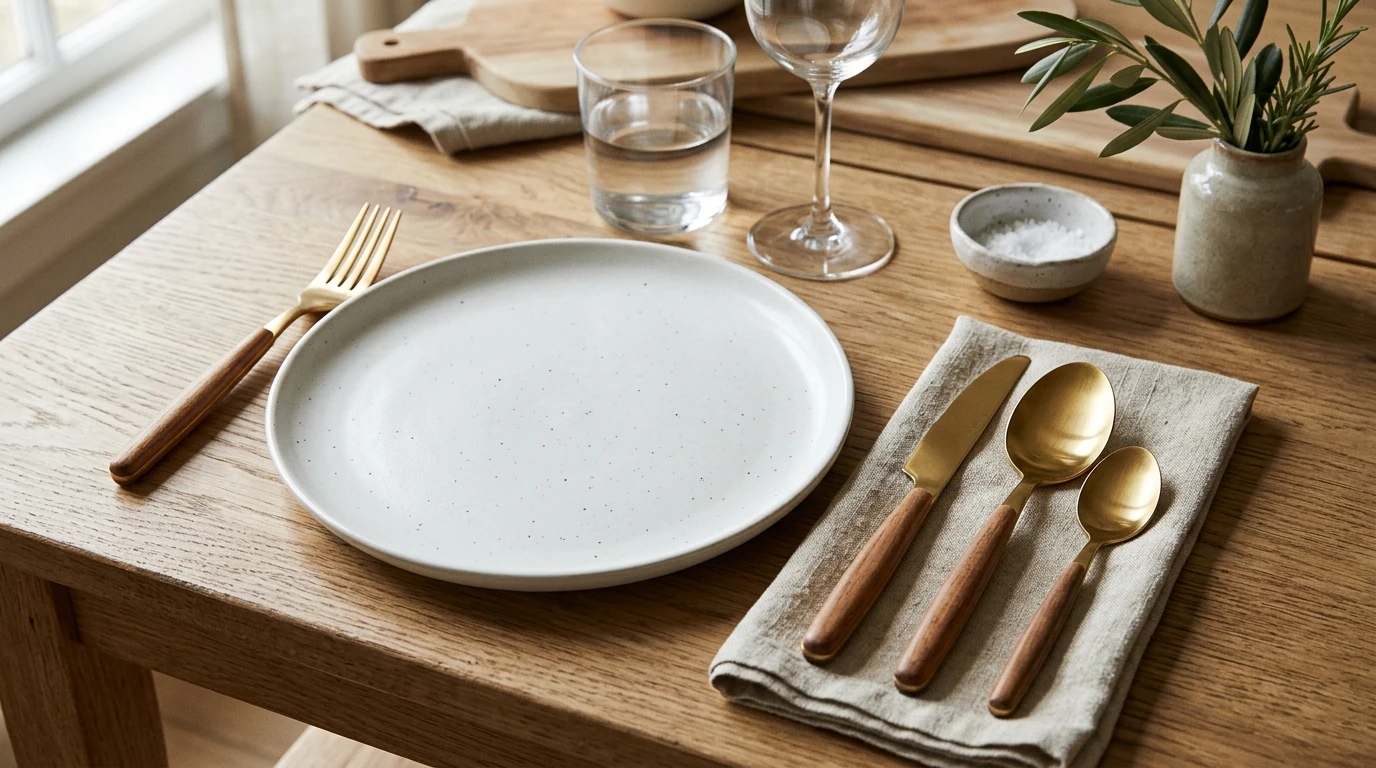
A 24-piece cutlery set that combines stainless steel strength, a warm wooden grip, and a gold-toned finish can make weeknight dinners feel more polished—and help special occasions look intentionally styled. The mix of materials brings both visual contrast and a more comfortable feel in hand, but it also means care habits matter. Below is a practical guide to what’s typically included, how the set performs at the table, how to clean it without dulling the finish, and easy ways to coordinate it with everyday and holiday place settings.
Most 24-piece flatware sets are designed around multiple place settings so the table looks consistent instead of pieced together. While exact counts can vary by brand, the common expectation is a balanced mix of the essentials: dinner forks, dinner knives, dinner spoons, and teaspoons.
| Household size | Typical coverage | Notes for hosting |
|---|---|---|
| 1–2 diners | Plenty | Comfortable buffer for entertaining or replacements |
| 3–4 diners | Ideal | Works well for everyday use with occasional guests |
| 5–6 diners | Tight | Consider adding a second set or extra forks/spoons for gatherings |
The standout appeal of a gold-and-wood flatware set is the contrast: a gleaming metallic head paired with a handle that feels warmer and more natural. Each material plays a different role—and benefits from slightly different care.
For general kitchen hygiene and cleaning habits, it helps to follow reputable guidance on keeping food-contact items clean—see the USDA’s basics on Clean practices and the American Cleaning Institute’s dishwashing tips for best results.
| Component | What it adds | Care priority |
|---|---|---|
| Stainless steel head | Strength and stain resistance | Rinse promptly; dry thoroughly |
| Gold-toned finish | Elevated, celebratory look | Avoid abrasives; use mild soap |
| Wooden handle | Warm grip and natural style | Keep dry; avoid long soaking |
“Premium” isn’t only about how cutlery looks in photos; it’s about how it feels through an entire meal. A well-shaped utensil reduces hand fatigue, feels secure during use, and looks cohesive across the place setting.
Because this style combines wood and a decorative metallic finish, simple habits go a long way: wash sooner, use gentler tools, and dry right away. These steps help reduce water spots on the gold tone and keep wood from swelling or dulling over time.
If you’re ever curious about how food-contact materials are evaluated more broadly, the FDA provides background on food contact substances.
| Do | Don’t |
|---|---|
| Hand-wash with mild soap | Use abrasive powders or steel wool |
| Dry right after rinsing | Leave pieces to air-dry in puddled water |
| Store in a divider tray | Toss loosely in a crowded drawer |
| Treat wood gently | Soak wooden handles for extended periods |
To build a coordinated look with pieces that share the warm wood-and-metal vibe, pair the 24-Piece Gold Stainless Steel Cutlery Set with Wooden Handles with the 4PCS Retro Bead Drinking Glass Set for texture at each place setting. For a snack board night, the Premium Acacia Wood Cheese Grater with Stainless Steel Blade and Catch Box fits the same natural-meets-modern aesthetic.
Yes, it can be used daily when the eating surface is stainless steel and the gold tone is a decorative finish. To keep it looking its best, wash with mild soap using a soft sponge and avoid abrasive cleaners that can wear the finish.
Hand-washing is recommended because dishwashers combine high heat, strong detergents, and long cycles that can dry out or dull wood and wear decorative finishes faster. Washing gently and drying promptly helps protect both the handle and the gold-toned surface.
Dry each piece immediately after washing and store utensils in a divider tray so they don’t rub together. Avoid abrasive scrubbers, and don’t leave flatware sitting in pooled water where spotting can set in.












Leave a comment